You smell it before you see it. Cardamom and roasting nuts drift through the air, vendors call out prices in rapid Hebrew, and someone is already handing you a wedge of watermelon before you have said a word. This is Carmel Market Tel Aviv, the city’s oldest and loudest open-air market, and for a first-time visitor it is the single best introduction to the way Tel Aviv actually lives. Not the glossy rooftop version. The real one.
Shuk HaCarmel, as locals call it, has been running along Carmel Street since the 1920s. A hundred years later it is still the heartbeat of the Carmel neighborhood, a dense and beautifully chaotic strip of fresh produce, cheap spices, street food, fabric merchants, and enough human energy to leave you slightly dizzy. It is also, quietly, one of the best places in the city to base yourself for a few days.
The market itself runs about 400 meters along HaCarmel Street, flanked by a maze of side alleys that branch into the Kerem HaTeimanim neighborhood on one side and the HaTachana area on the other. This geography matters because it puts you within walking distance of practically everything that makes Tel Aviv tick.
Kerem HaTeimanim, the Yemenite Quarter directly adjacent to the market’s western edge, is arguably the most atmospheric pocket in the city. The streets are narrow enough that neighbors can pass a coffee cup between windows. The buildings are low, painted in faded yellows and terracottas, and the restaurants here serve some of the most honest Yemenite food in the country. Jachnun on a Saturday morning. Lahoh with honey. Slow-cooked oxtail that has been simmering since before you went to sleep.
Walk ten minutes south and you hit the beach. Walk ten minutes north and you are in the middle of Allenby Street, the scrappy, creative artery that connects the market to the city center. Florentin, Tel Aviv’s grittier design district, sits just beyond the southern edge. The entire neighborhood operates like a hub, and almost nowhere in the city is more walkable.
For foodies, this location is close to essential. The market supplies the raw ingredients. The surrounding streets turn them into meals. You can buy a bag of za’atar at 9am, pick up fresh pita from a Yemenite bakery at 10am, and sit down to a proper fish dinner at a HaTachana restaurant by 8pm, all without needing a taxi.
Most visitors do one loop and leave. That is a mistake. The Carmel Market has layers, and the interesting parts tend to be perpendicular to the main drag.
The central lane is produce and performance. Vendors stack pyramids of pomegranates with a competitive intensity. Juice stands squeeze fresh orange and pomegranate while you wait. The prices are better than any supermarket in the city, and the quality, especially for herbs and tomatoes, is reliably excellent. Get here before noon on a weekday. Fridays are electric but crowded in a way that makes browsing difficult.
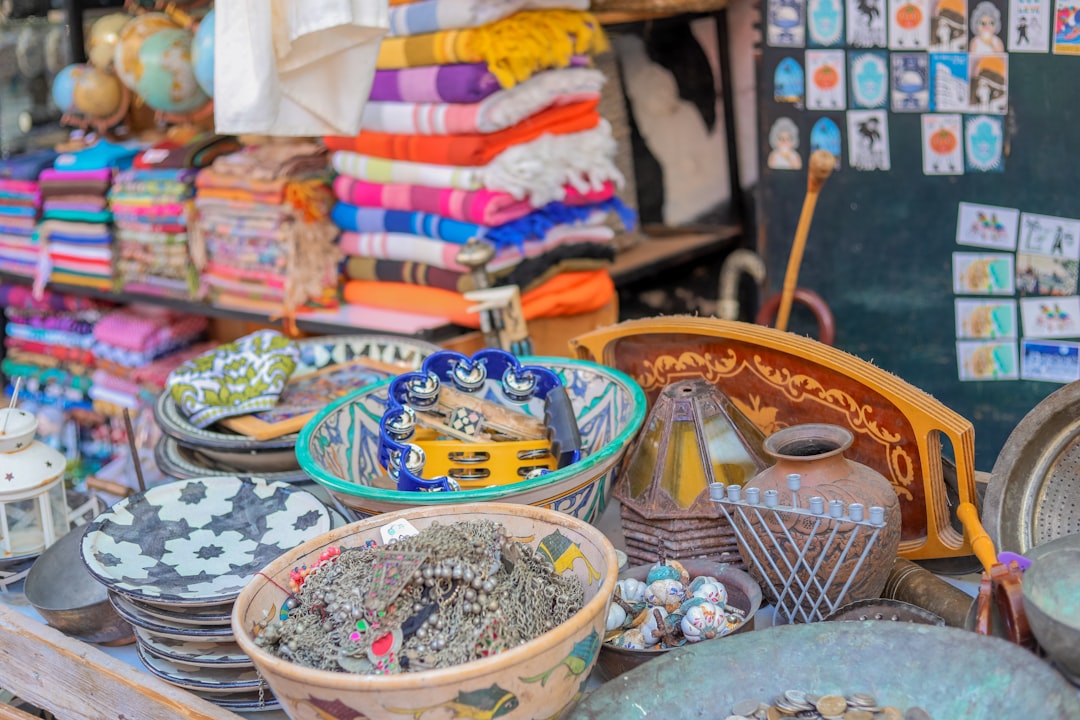
The side alleys are where you find the rest. There are fabric merchants who have held the same stall for three decades. There are spice shops where the owner will mix a custom blend if you describe what you are cooking. There is a small cluster of antique and vintage dealers near the southern end who seem to have acquired every tchotchke in the country. And threading through all of it are the food stalls, which are the real reason many people keep coming back.
HaBasta, just off the market, has been one of Tel Aviv’s most respected restaurants for years and sources most of its produce from the stalls outside its door. It is a genuinely excellent lunch spot. For something cheaper and faster, the sabich stands along the market are fierce competition for the best in the city, stuffed with fried eggplant, hard-boiled egg, and amba mango sauce in fresh pita. Tourists tend to overlook sabich in favor of falafel. That is a significant error.
The market is at its best on Tuesday and Friday mornings, when the stalls are fully stocked and the energy peaks. It is closed on Saturdays.
The neighborhood rewards slow exploration. A few things worth building into your days:
HaTachana (The First Station) is a beautifully restored Ottoman-era train station about a ten-minute walk south of the market. It now hosts independent boutiques, restaurants, and a small craft market on weekends. The space itself, with open courtyards and original architecture, is worth the walk even if you do not buy anything.
The beach access from this neighborhood is excellent. Banana Beach and Jerusalem Beach sit at the end of short walks, and both are calmer than the more crowded stretches farther north near Gordon and Frishman. In the summer months, locals tend to gravitate here over the tourist-heavy northern beaches.
If you have any interest in Tel Aviv’s architectural history, the streets around Kerem HaTeimanim are worth a slow afternoon. The buildings predate the Bauhaus wave that defines the White City, and the style is something rawer and more eclectic. The neighbourhood has been gentrifying steadily, but pockets of the original streetscape survive intact.
For nightlife, the streets between the market and Florentin fill up on Thursday and Friday nights. It is younger and louder than the Rothschild corridor, with small bars, live music, and a general sense that the evening has no fixed ending time.
This is where the choice you make at the start of your trip shapes everything else. Staying near the Carmel Market is not just about convenience at breakfast. It is about being embedded in a neighborhood that actually functions like a neighborhood, with corner shops, morning sounds, and the kind of pedestrian life that makes cities feel worth visiting.
Hotels in this area exist, but the options are limited and the ones that do exist tend toward either the expensive boutique tier or the basic hostel end. The middle ground, a proper apartment or short-term rental with a kitchen and a bit of space, is where this neighborhood really shines for visitors.
Having a kitchen when you are two minutes from one of the best produce markets in the Middle East is not a small thing. It changes how you interact with the city. You shop with purpose. You cook what you find. You eat better and spend less.
The sweet spot for apartments near Carmel Market Tel Aviv is roughly the triangle formed by HaCarmel Street, Allenby, and the beachfront promenade. This puts you within ten minutes of the market on foot, with easy access to the beach in the other direction. Most of central Tel Aviv is reachable without a car from this base.
If you are visiting Tel Aviv for the first time, there is a real case that this is the best neighborhood to anchor yourself. The Rothschild and Dizengoff areas get more attention in travel media, but the Carmel neighborhood offers a denser, more textured version of the city’s daily life, at slightly lower prices and with the market itself as a daily anchor point.
For travelers who are working remotely from Tel Aviv and want a neighborhood that combines good cafe culture with genuine local character, the streets around the Carmel Market are consistently underrated. The wifi is good, the coffee is strong, and you can take a lunch break that involves fresh figs and hummus for approximately the cost of a sandwich elsewhere in Europe.
The market neighborhood is not for travelers who want quiet, manicured, and predictable. It is for people who like cities that feel alive. If that sounds like you, staying within walking distance of Shuk HaCarmel is one of the better decisions you can make for a Tel Aviv trip.
The city has many faces. This one is the most honest.
Carmel Market (Shuk HaCarmel) is Tel Aviv’s largest and oldest open-air market, running along HaCarmel Street in the center of the city. It sells fresh produce, spices, street food, clothing, and household goods. The market is open Sunday through Friday, typically from early morning until early evening, and is closed on Saturdays for Shabbat. Tuesday and Friday mornings tend to be the liveliest times to visit.
The market itself is excellent for fresh fruit, spices, and street snacks. Do not miss the sabich stands inside the market and the fresh juice stalls. The surrounding Kerem HaTeimanim (Yemenite Quarter) has some of the best traditional Yemenite food in Israel, including jachnun and lahoh. HaBasta, a restaurant just off the market, is one of the city’s most respected lunch spots and sources its ingredients directly from the stalls.
The best area to stay is the triangle between HaCarmel Street, Allenby, and the beachfront promenade. This location puts the market within easy walking distance while also giving you quick access to the beach and central Tel Aviv. Apartments and vacation rentals in this zone are generally better value than hotels and give you kitchen access to make the most of shopping at the market.
The neighborhood has a lot to offer beyond the market. HaTachana, a beautifully restored Ottoman train station about ten minutes south, hosts boutiques and a weekend craft market. The beach is a short walk west. The Yemenite Quarter next to the market is worth an afternoon of slow wandering. In the evenings, the streets between the market and Florentin come alive with bars and live music, especially on Thursday and Friday nights.
It is one of the best areas for first-time visitors. The location is central, walkable, and gives you access to the beach, the historic Yemenite Quarter, and the city center all within a short walk. The neighborhood offers a genuine sense of daily Tel Aviv life rather than a purely tourist experience, and the market itself is an ideal first-morning introduction to the city’s food culture and energy.